Publish Date:2025-11-24
2025.11.20 Taipei Medical University Hospital
From Three Fingers to Ten : A Life Miracle
Precision Medicine Helps Father with “Ectrodactyly-lobster claw deformity” Welcome a Healthy Baby Girl

A single-gene mutation no longer dictates destiny. The Reproductive Medicine Center at Taipei Medical University Hospital (TMUH) successfully used advanced genetic testing and IVF technology to block the inheritance of a rare single-gene disorder that causes a baby to be born with only three fingers on one hand, known as “lobster claw deformity.” The team helped a patient overcome this hereditary condition and welcome a healthy baby girl. Importantly, the newborn will not carry or pass on this mutation to future generations. This marks a globally rare case of eliminating a de novo mutation that leads to EEC Syndrome (Ectrodactyly–Ectodermal Dysplasia–Clefting Syndrome), creating a life miracle “from three fingers to ten.”
TMUH Superintendent Dr. Chun-Ming SHIH stated that the development of precision medicine continues to drive innovation and progress in healthcare, shifting the medical role from “disease treatment” to “risk prevention.” This achievement is not only a breakthrough in Taiwan’s medical technology but also a demonstration of TMUH’s commitment to safeguarding life through personalized precision medicine. TMUH will continue its mission of combining precision medicine with clinical care to fulfill the vision of “extending healthy life” with science and compassion.
Dr. Chi-Huang CHEN, Director of the TMUH Reproductive Medicine Center, explained that the patient, Mr. Li, was born with the rare genetic condition EEC Syndrome. Due to the medical technology in Taiwan at that time, his biological mother hoped he could receive more comprehensive care. With the assistance of internationally renowned pediatric hematology-oncology expert Professor James S. Miser and his wife, Angela Miser, Mr. Li later moved to the United States. Growing up, he suffered from multiple symptoms including split hands/feet, sparse hair, cleft lip and palate, and urinary tract abnormalities such as renal malformations and ureteral defects. Throughout his life, he has undergone more than fifty surgeries.
Despite the many challenges he faced, Mr. Li and his wife Liz never gave up on their dream of having a healthy child. They turned to Taiwan’s advanced reproductive medicine and sought help from the TMUH Reproductive Medicine Center. Overcoming the inheritance of this rare single-gene disorder became the team’s central challenge.
After taking on this highly complex case, Dr. Chen’s team confirmed through genetic testing that the patient carried a de novo mutation in the TP63 gene, inherited in an autosomal dominant pattern — the cause of EEC Syndrome. EEC Syndrome is an extremely rare congenital genetic disorder, with an incidence of about 1 in 100,000. If either parent carries the mutation, the child has a 50% chance of being affected. Typical clinical symptoms include ectrodactyly or “lobster claw deformity,” where newborns may be born with only three fingers, along with ectodermal abnormalities such as cleft lip/palate, urinary tract abnormalities (e.g., renal malformations, ureter issues), eye problems (dry eyes, keratitis, vision impairment), hearing issues, and genitourinary malformations.
Furthermore, Dr. Chen emphasized that the patient’s condition resulted from a de novo mutation, which makes traditional genetic linkage analysis inapplicable. This meant the team had to “start from zero” and overcome significant scientific uncertainty. Ultimately, through PGT-M (Preimplantation Genetic Testing for Monogenic Disorders) in third-generation IVF, the team designed customized genetic probes and performed precise embryo-by-embryo analysis to identify and select the only embryo that was both mutation-free and chromosomally normal.
After ten months of pregnancy, ultrasound confirmed the fetus had ten healthy fingers. In September this year, the couple welcomed a baby girl. When the delivery team confirmed she had ten fully formed fingers, the room erupted in joy. Dr. Chen added that the baby girl not only has normal hands but also does not carry the TP63 mutation — symbolizing the end of this hereditary condition in the family and the beginning of new hope.
Dr. Chen further highlighted that this case demonstrates that even for de novo mutations with no family history, advanced third-generation IVF technology (PGT-M) can successfully prevent the transmission of more than 6,000 known single-gene disorders. These include more common conditions such as spinal muscular atrophy (SMA), thalassemia, and hemophilia (see Table 1). Through IVF with genetic testing and embryo selection, couples can significantly reduce the risk of passing on hereditary diseases.
Dr. Chen reminded the public that regardless of family history, all couples should prioritize premarital health screening and carrier testing. Understanding one’s genetic background early and working closely with medical professionals can ensure a safe and reassuring reproductive journey. Families affected by single-gene disorders should not face discrimination or a sense of inevitability — with continuous innovation in precision medicine, healthcare can transition from merely “treating disease” to truly “preventing risk.”
Table 1: List of Common Single-Gene Diseases and Pathogenic Genes Indications for PGT-M
System
|
Common genetic disease |
Pathogenic gene |
| Nervous System |
Spinal muscular atrophy (SMA) |
SMN1 |
| |
Huntington’s Disease |
HTT |
| |
Neurofibromatosis Type 1 |
NF1 |
| Cardiovascular System |
Marfan Syndrome |
FBN1 |
| |
Familial Hypercholesterolemia |
LDLR / APOB / PCSK9 |
| |
Inherited Long QT Syndrome |
KCNQ1 / KCNH2 / SCN5A |
| Endocrine / Metabolism |
Phenylketonuria (PKU) |
PAH |
| |
Congenital Adrenal Hyperplasia |
CYP21A2 |
| |
Galactosemia |
GALT |
| Respiratory System |
Cystic Fibrosis |
CFTR |
| |
Primary Ciliary Dyskinesia |
DNAH5 / DNAI1 |
| Hematologic System |
Sickle Cell Disease |
HBB |
| |
β-Thalassemia |
HBB |
| |
Hemophilia A / B |
F8/F9 |
| Ophthalmology |
Retinitis Pigmentosa |
RHO/RPGR |
| Hearing |
Hereditary Hearing Loss |
GJB3 |
| Dermatology |
EEC Syndrome |
TP63 |
| |
Epidermolysis Bullosa |
COL7A1 |
| Connective Tissue |
Osteogenesis Imperfecta |
COL7A1/COL7A2 |
| Development / Intelligence |
Rett syndrome |
MECP2 |
| |
X-linked Fragile X Syndrome |
FMR1 |
Source: Taipei Medical University Hospital

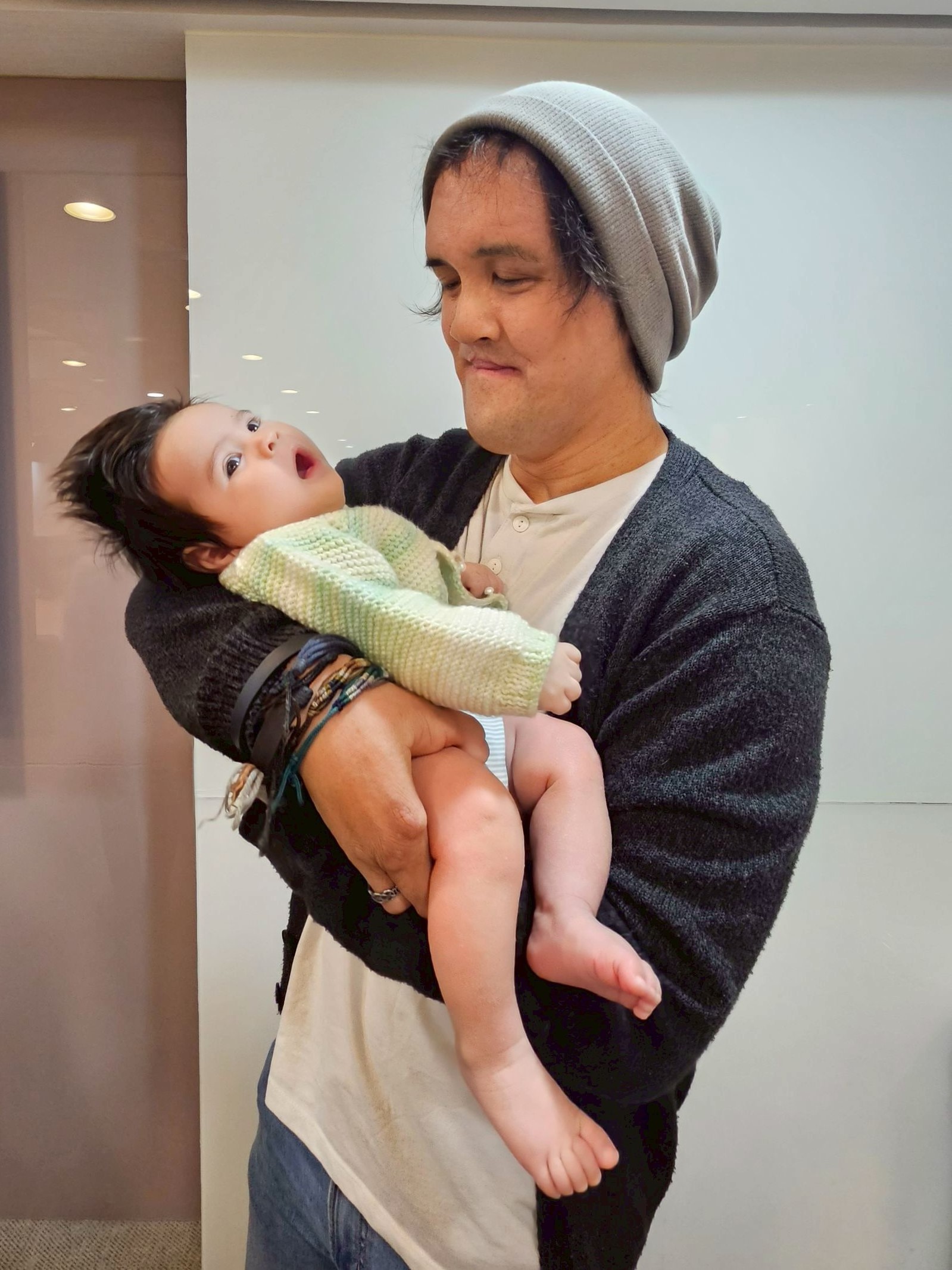
▲Mr. Li (right) and his wife Liz (left) successfully welcomed a healthy baby girl. If the girl plans to have children in the future, she will not give birth to offspring with the same rare genetic disease, marking a globally rare case of ending EEC syndrome.。
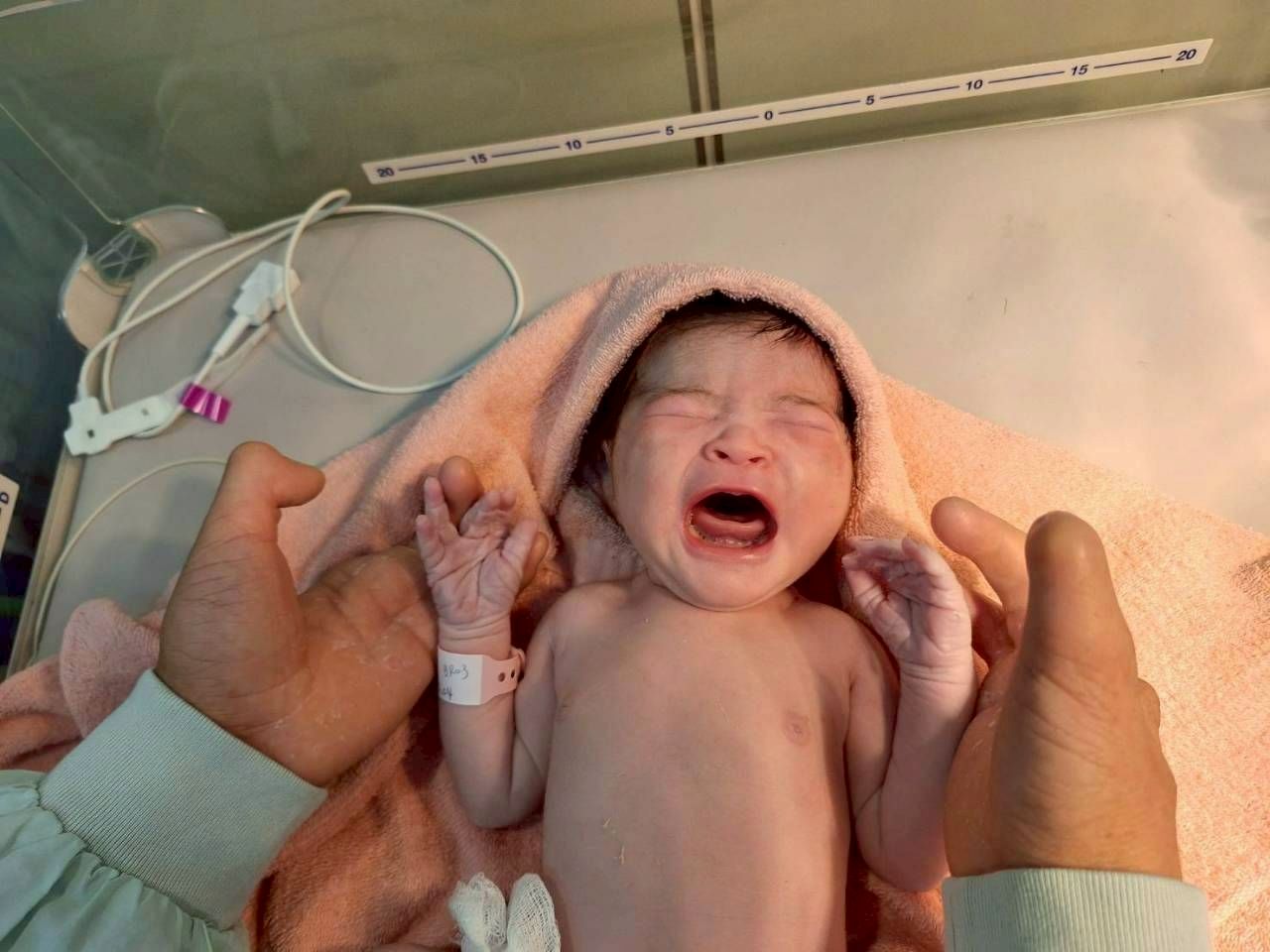
▲ Mr. Li's wife, Liz, gave birth to a healthy baby girl in September. The team at the Reproductive Medicine Center of Taipei Medical University Hospital erupted in cheers after confirming she had all ten fingers. The photo shows Mr. Li welcoming his daughter in the delivery room.